Friday, February 18, 2011

What a difference......


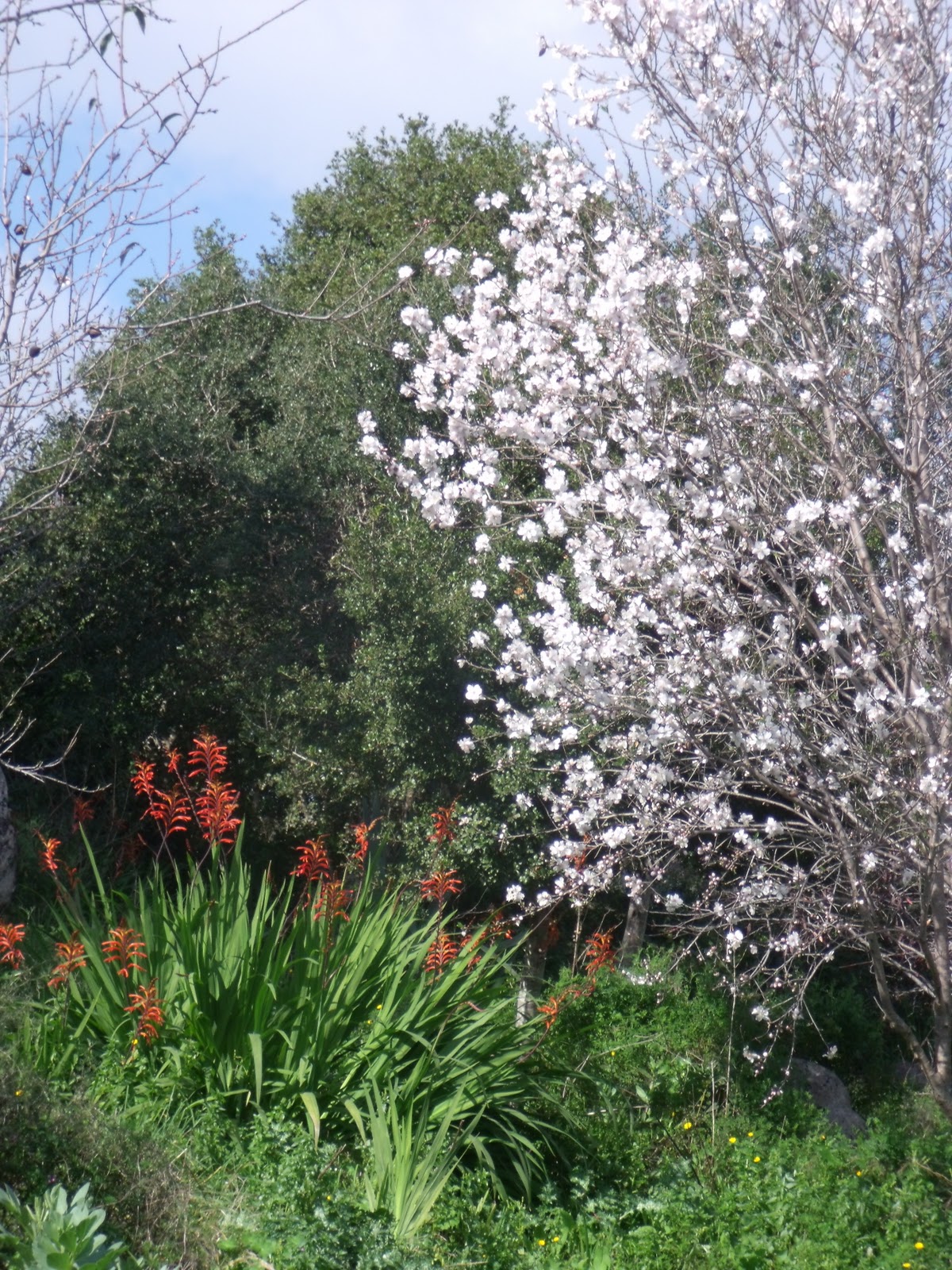
.......a day makes.  This photograph of a nosegay of wild spring flowers picked at the wayside of the track behind my house was taken in bright sunshine, yesterday; almost exactly twenty-four hours before the one that heads the post below.

A change in the weather


Normally, when I clock-in to my Finicounda office I park my car on the jetty.  Today, with a southerly gale blowing directly on-shore, I thought better of it.

Tuesday, February 15, 2011

The Colossus of Maroussi


Through the past fifty years I have read and re-read Henry Miller’s, ‘The Colossus of Maroussi’ many times.  It is the best travelogue I have ever read about Greece; the experience of Greece.  Although inevitably dated - Miller wrote it after a visit to Greece in 1939 - no other writer has come near to interpreting to me anything of the perception I have, feel, of Greece’s unique, impalpable yet tantalizingly almost tangible, atmosphere.  Presently re-reading the book for the nth time I came upon the following passage which is not only illustrative of Miller’s descriptive genius but also of the forces that drew me to Greece, and continue to hold me here.

“I had entered a new realm as a free man  -  everything had conjoined to make the experience unique and fructifying.  Christ, I was happy with the full consciousness of being happy.  It’s good to be just plain happy; but to understand that you are happy and to know why and how, in what way, because of what concatenation of events or circumstances, and still be happy, be happy in the being and knowing, well that is beyond happiness, that is bliss, and if you have any sense you ought to kill yourself on the spot and be done with it.  And that’s how I was - except that I didn’t have the power or the courage to kill myself then and there.  It was good, too, that I didn’t do myself in because there were even greater moments to come, something beyond bliss even, something which if anyone had tried to describe to me I would probably not have believed.  I did not know then that I would one day stand at Mycenae, or at Phaestos or that I would wake up one morning and looking through a port hole see with my own eyes the place I had written about in a book but which I never knew existed nor that it bore the same name as the one I had given it in my imagination.
Marvelous things happen to one in Greece - marvelous good things which can happen to one nowhere else on earth.  Somehow, almost as if He were nodding, Greece still remains under the protection of the Creator.  Men may go about their puny, ineffectual bedevilment, even in Greece, but God’s magic is still at work and, no matter what the race of man may do or try to do, Greece is still a sacred precinct - and my belief is it will remain so until the end of time.”

Friday, February 11, 2011

The Book Fair


The public spirited couple who set up the website www.madaboutmessinia.com publicise through it roughly bi-monthly "Book Fairs".  Venues change for each event.  Today's was at Hercules' Bar in Methoni.  For british folk resident here the book fairs provide both a dumping place for unwanted books and a source of new reading.  All books are sold for just one euro.  The profits are sent to a local charity; presently, I believe, the Mayor of Kalamata's charity for disadvantaged children.  The book fairs also serve as a social focus, rather in the way that christenings, wedding and funerals did  in the lost land of my birth.

The Beekeeper

Last night I watched “The Beekeeper” a film made in 1986 by Theo Angelopoulos; it is the most poetic film I have ever watched.  The allusions begin in the very first scenes when a small bird becomes trapped in a room in which a wedding reception is being held and allusions, both blatant and subtle, are liberally scattered throughout the remainder of the film.   The story, such as it is, is that of the  botched life of its protagonist, Spyro (Marcello Mastroianni) who may be a metaphor for everyman and whose botched existence, or something near to it, may be that of all of us.  To me the film also emphasised the essential singularity of life; its aloneness.  Usually preferring the written word I am not a film enthusiast but occasionally a film does move me; invariably such films are those that use cinema alone and in its own right as the communicative medium.  “The Beekeeper” is one such.  Dialogue is sparse; images communicate.  Director Angelopoulos does not patronize his audiences; long lingering scenes allow plenty of time for imagination to occupy vacancies, to invent and perhaps to weave something of the viewer’s own life experience into that or those being lived out in the film.  The photography, prosecuted in the most uncompromising of conditions - the film was largely shot in cold, grey, wet early spring in bleak, neglected, Northern Greece - is stunning, as is the unobtrusive but haunting Eleni Karaindrou background music.  This film will, for me, stand watching time and again and, as with re-reading the best of books, I expect each subsequent viewing to be something of a novel experience.  

Tuesday 8th of February


Tuesday 8th of February was the forth day in succession here to begin with a stunning orange and blue dawn heralding sunrise into a cloudless cerulean sky.  By mid-morning I was sitting in shirtsleeves on a terrace in my garden.  I was sipping coffee and reading.  The sun was pleasantly warm on my face and forearms.  Presently I am struggling to read, “The Road Home” by Rose Tremain.  There is a delinquency in my reading experience of of both women writers and contemporary fiction but thus far “The Road Home” seems only to confirm to me why there is such a delinquency.  The delightful condition of the morning and a book that was not engaging my full attention conspired to allow my mind to drift to considering whether or not I was happy.  Certainly I was not unhappy, far from it, but, I wondered, is not being unhappy altogether synonymous with being happy?  There is everything about having nothing more pressing to do than to sit peacefully reading in sunshine that ought to make a man happy, but each time I looked up from my book I was confronted with the spectacle of what presently appear to be the overgrown ruins, rather than the work in progress, of my summer kitchen.   For just a moment a lack of moral rectitude about my condition pricked what little remains of my Northern European inwit but the influence of many years living amongst Mediterranean people for whom the priority of life is its enjoyment - something that their Northern European paymasters’ will never understand - absolved me from guilt to foster my immediate return to a condition of blissful contentment.  By mid-afternoon a light breeze had sprung from nowhere to make the air feel cool enough for me to abandon my seat and my book and to go to the olive grove from which I have recently been harvesting firewood.  There I spent the last hours of the afternoon stripping twigs from useable boughs which I loaded onto my jeep.  The remaining twigs I burnt on a big bonfire, this work assuaging to a degree my earlier prick of conscience.  Before loading up the afternoon’s harvest of logs and making my way home I rested against the bole of an olive tree to watch my fire burn down and to savour the scent of woodsmoke on cool early evening air and to dream; whatever my state was it was certainly not one of discontent or unhappiness.
Gazing into the small grey pillow of smoking ash, all that now remained of three huge piles of brash, I further ruminated on the condition of happiness.  Could it be  that “happiness” once secured, can induce and maintain a state of complacency that denies the will to be courageous, to test the boundaries of perceptions of contentedness and happiness?  So ran my thoughts. 
The following morning was quite similar to the previous four, if just a little breezier.   I did not go to my seat on the terrace but stayed in the house writing at my computer and looking out onto my sun-soaked garden through a wide, open doorway; I was not unhappy.

Monday, February 7, 2011

Making wood while the sun shines

To harvest olives for oil from the variety of olive tree that is cultivated hereabouts requires that olive bearing branches are cut from the trees.  On the ground, olives are beaten from the cut branches to be gathered into sacks for onward transmission to an oil extraction plant.  Traditionally the branches were beaten by hand-wielded sticks, presently the work is done by plastic fingers on the revolving spindles of portable petrol engined machines.   When the harvest is over large piles of pruned boughs and twigs litter the groves.  To facilitate the work of the tractors that will come later to cultivate the groves this surplus material has to be removed.  For many years now, in two of the olive groves behind the house, we have exchanged our labour for the useable firewood we can bring home to feed our wood-stove through subsequent winters.  On a fine day, and I would only consider doing this work on a fine day, it is wonderful work.  First stripping twigs from useable wood with a billhook, burning unusable twigs on huge bonfires and finally bringing back the booty.  The work is heavy, involving lot of bending and humping which gives me the kind of exercise of which these days I get too little but the elemental environment is nothing less than paradisic.